
Amazon FBA vs a Miami 3PL
This is not a contest with a winner. FBA is the best way to sell on Amazon with Prime, and a third-party warehouse is the best way to sell everywhere else, keep your brand on the box, and hold inventory without Amazon's storage math. The useful question is which units go where. Here is how the two compare, line by line, using Amazon's public fee structure and our published rate card.
What each one does, and what it costs you
Amazon's fee amounts change on Amazon's schedule, so we describe the structure rather than quote numbers that will be stale. Our rates are the ones on the pricing page.
| What you are comparing | Amazon FBA | Marcana 3PL in Miami |
|---|---|---|
| Where it sells | Amazon only, with Prime badge | Shopify, Amazon FBM, Walmart, TikTok Shop, wholesale, and FBA inbounds from the same stock |
| Monthly plan | No plan; fees per unit and per cubic foot | $89, $179 or $349 per month including receiving, storage allowance and platform |
| Per-order handling | Fulfillment fee set by size tier and weight, changes with Amazon's schedule | $1.95 per order up to 2 lb and 2 items, $0.35 per additional item, published |
| Storage | Per cubic foot, higher in Q4, aged-inventory and low-inventory surcharges | 30 days per box on Essential; 1 or 3 pallets on Growth and Scale; $35 per extra pallet per month |
| Inbound | Placement fees by how many FCs you split to; prep must meet Amazon's rules or it is charged | Cartons received without appointment; 10 to 75 boxes included; $5 per extra box; $25 per pallet |
| Branded unboxing | Amazon packaging | Your box, tissue, card and sample; inserts $0.15 per order |
| Returns | Handled by Amazon, graded to Amazon's rule | Inspected, photographed, graded to your rule, from $4 per return |
| Visibility | Seller Central reports | Receiving photos, per-SKU counts and lot data in your dashboard |
| Who answers | Seller Support | A bilingual team in Miami, same business day |
Use FBA for these units
Prime demand
If a product's sales depend on the Prime badge and Buy Box share, the units that will sell on Amazon belong in FBA.
Small, fast, standard-size
FBA's fee structure favors small standard-size items that turn quickly. Slow or bulky units pay the most in storage and surcharges.
Amazon-only brands
If Amazon is your only channel and you are not building a brand experience beyond it, FBA alone can be enough for a while.
Use a Miami warehouse for these units
Every other channel
Shopify, TikTok Shop, Walmart, wholesale and Amazon FBM ship from one inventory with your packaging and your rules.
Reserve and slow stock
Holding inventory in Miami at $35 per pallet and feeding FBA in small inbounds avoids aged and low-inventory surcharges on both ends.
Control and visibility
Receiving photos, lot tracking, your returns rule and a person who answers the same day. Things Amazon does not offer a seller.
Both, with a Miami warehouse feeding FBA
Most brands that talk to us end up with a hybrid: the units that will sell on Amazon in the next few weeks go to FBA, everything else lives in Miami. From Miami we prep and ship FBA inbounds in the sizes Amazon rewards, run Shopify, TikTok Shop and Walmart orders, and receive removal orders when a listing slows. One receipt, one count, several channels.
- Receive your supplier's shipment once, in Miami, with photos and a count.
- Prep FBA units at $1.25 per unit and less by volume, and ship inbounds at $3.50 per carton.
- Keep the rest of the inventory selling on every other channel at $1.95 per order.
- Pull slow units back with a removal order and process them from $4 per return.
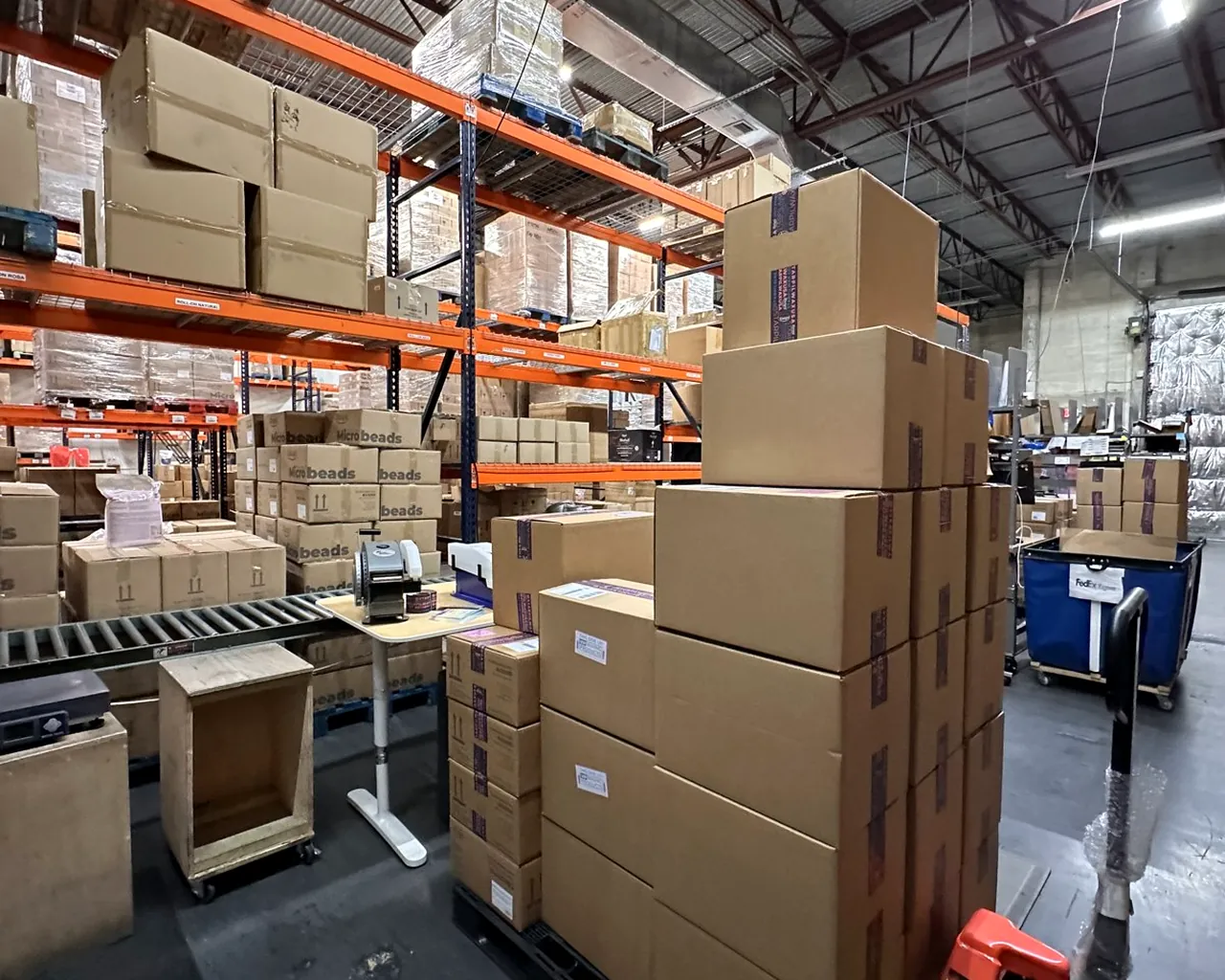 Hybrid model
A way to compare your own numbers
List the channels
Write down where units actually sell today and where you plan to sell in six months.
Split the units
Units sold on Amazon with Prime in the next four to six weeks go to FBA. Everything else is a 3PL unit.
Price the 3PL side
Plan plus $1.95 per order plus carrier rates. The plan builder does this in about three minutes.
Price the FBA side
Fulfillment fee times units, plus monthly storage, plus inbound placement and any prep charges, from your Seller Central fee preview.
Add the surcharges you avoid
Aged inventory, low inventory level and Q4 storage on the units you kept in Miami instead.
We are not against FBA. We prep for it every day. What we are against is a brand keeping a year of inventory inside Amazon because it never thought about the alternative, and paying for it every month.
Questions about FBA versus a 3PL
For Amazon orders with Prime, usually not; FBA's per-unit fee includes shipping. For every other channel, and for storing inventory, a 3PL is usually cheaper and more predictable because plans and rates are published and there are no seasonal or aged-inventory surcharges.
Yes, and most brands do. We receive your supplier shipment in Miami, prep and ship inbounds to FBA in the quantities Amazon rewards, and ship all other channels from the same inventory.
Orders shipped by a 3PL are merchant-fulfilled, so they do not carry the FBA Prime badge. Keep the Prime-dependent units in FBA and use the 3PL for the rest, or for Seller Fulfilled Prime if your account qualifies.
Amazon charges monthly storage per cubic foot, with higher rates in the fourth quarter, plus an aged-inventory surcharge for units held too long and a low-inventory-level fee for units held too briefly. The amounts are in your Seller Central fee schedule.
Inbounds prepped in Miami ship the day they are ready and travel by parcel or pallet to the assigned fulfillment center. Holding stock in Miami and sending smaller, frequent inbounds keeps FBA inventory within Amazon's preferred range.
Plans are $89, $179 or $349 per month, pick and pack is $1.95 per order, FBA prep is $1.25 per unit and less by volume, and carrier rates are listed per shipment. Everything is on the pricing page.
Split your inventory the smart way.
Build your Miami plan with published rates and compare it with your Seller Central fee preview. Three minutes, no account required.